
In Switzerland, people eat Three Kings Cake on January 6 (Epiphany). It’s more of a sweet bread than a cake. Either way, it’s delicious and exciting because one of the rolls hides a surprise: a tiny king baked into a single piece.
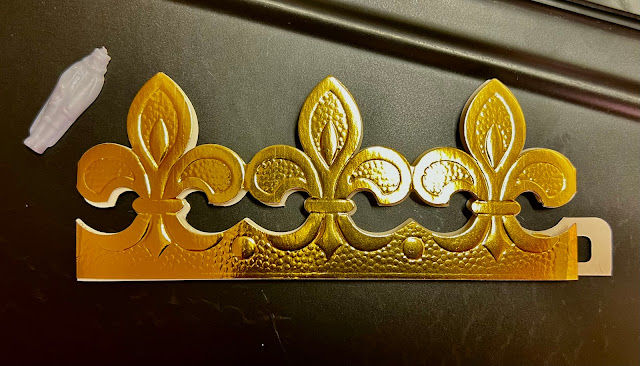
Whoever bites into it gets to wear the golden crown and be queen or king for the rest of the day. Traditionally, that meant choosing the family dinner, the TV show, or even setting your own bedtime.
Here’s a sweet story from a time when people still took black-and-white photos.
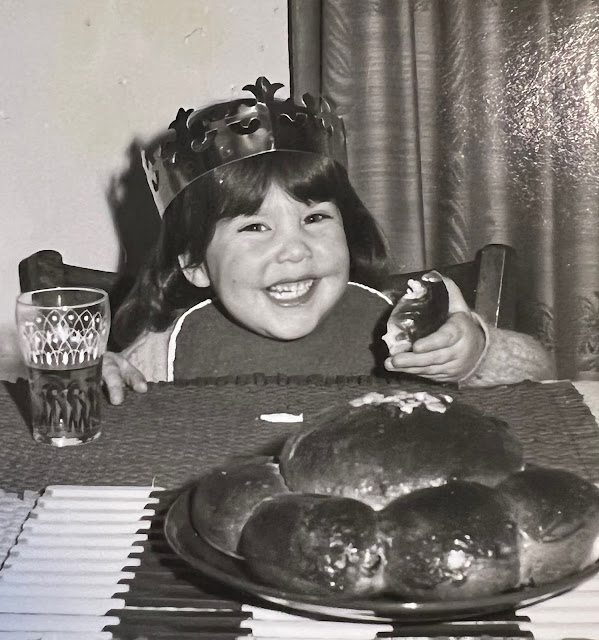
The parents explained the rules to their young daughter. She took one look at the cake and declared confidently:
“I’m going to be the king!”
They gently replied, “You know, you might be, but you might not. There are eight pieces, and only one person can be king.”
“When I’m king, I want pizza, and five bedtime stories, and I want to wear my pretty jammies, and, and …”
She was buzzing with excitement. There was so much she wanted to happen.
And lo and behold.
She chose her piece, took a bite, and within seconds produced the tiny king.
“See! I’m the king! I’m the king! Hooray!”
Yes, that girl was me.
Why am I telling you this? Because it was one of very, very few occasions in my life when I got lucky. In recent years, 2013 and 2018, I was queen again. That’s it.
So the other night, at our town magazine’s editorial meeting, our wonderful editor-in-chief went to great lengths to home-bake a Three Kings Cake for us (see the photo at the very top of this post, isn’t it gorgeous?).
Everyone chose a piece and began biting into their roll.
Me? I pulled mine apart. Not because I was desperate to be queen, but because in the past few weeks I’d needed dental appointments twice in a row after biting off parts of my teeth. At that point, there was more filling than tooth left. I was definitely not looking for a repeat performance.
“You don’t have to worry about a plastic king,” the chief said. “It’s just an almond.”
A minute later, I pulled an almond from my piece and laughed: “Can you believe it? I’m the queen! I usually never win. Wow, that just made my day!”
People smiled, and the meeting continued. (I should mention that we made an exception that evening and were eating and talking at the same time.)
The colleague sitting to my left finished her piece, and the chief casually asked, “So, you didn’t have an almond in yours?”
She replied, “I did, actually. But I didn’t want to spoil Tamara’s joy.”
And then, of course, everyone else chimed in: they had almonds, too.
Ugh.
The chief had pulled the oldest trick in the book: baking a cake with a king, or in this case, an almond, in every single piece. Because in her view, everybody should be a winner.
That made me reflect on performance, competition, and winning.
Our world works that way, doesn’t it? You work hard, outperform others, and you win. And that will make you happy, popular, and sometimes rich.
Right?
But what about everyone else? They worked just as hard. According to their teacher, supervisor, or sports coach, their best simply wasn’t good enough. Sometimes there’s blatant favoritism; we’ve all seen it. Along the way, we meet people who cheat. And sometimes being well educated, highly qualified, beautiful, and smart still won’t help you win an election, especially if you’re female and non-white.
So what’s the solution? Making everyone a winner every once in a while?
You see this at certain children’s sports events: participation trophies for everyone, meant to honor effort and spare hurt feelings.
That might be sweet and appropriate in kindergarten or first grade.
But at some point, children have to learn that there’s no such thing as guaranteed medals. The fastest runner wins gold. End of story. It may feel unfair, the winner might be taller, stronger, or have parents who can afford private coaching and extra practice. But that’s life. In sports, performance can be measured down to a hundredth of a second.
In business, the criteria are far less transparent. Is it seniority? Revenue? Efficiency? Or simply sucking up to the boss?
So maybe the problem isn’t that we don’t win often enough.
Maybe the problem is what we’re told counts as winning.
“Winning at life” seems to mean having it all: a great career, a nice house, cars, holidays, the right clothes, the right résumé. It’s visible. Measurable. Comparable.
“Winning in life,” on the other hand, is quieter. It’s living according to your values. Being able to look at yourself without flinching. Staying true to yourself and fair to others. Not taking shortcuts. Not selling your soul. Helping and supporting people even when there’s nothing in it for you.
That kind of winning doesn’t come with a crown. And no one bakes it into a cake.
But maybe it’s the only one that actually lasts.
What does winning in life mean to you — and has that definition changed over time?
Thanks for sharing your story, Tamara! I never heard about this tradition. I like it 🙂
ReplyDeleteWinning in life matters a lot more to me than winning at life, I appreciate how you differentiate the two. Also, what a sweet photo of little Tamara!
ReplyDeleteLove the story and the black and white photo of you. Always happy and smiling. That's you.
ReplyDeleteOh, Tamara, what a wonderful story - and photos!
ReplyDeleteI LOVE your definition of winning - living according to your values!
Yes!!
My college roommate is from a big family, (10 kids!), and they had a great tradition of saving the tip of your slice of cake, the 'wishing point,' and eating it last.
I'm guessing that was a good way to let each kid have a wish, on someone's birthday!
Or - anytime they have a piece of cake (or pie!)
I quickly adopted the practice, and have been saving 'wishing points' for nearly 60 years now! It took my friend Donna awhile to remember when we share a dessert - but she usually does.